WorldBox - Sandbox God Sim
- 4.6
- Rating
- 50.00M
- Installs
- Free
- Price

 Analysis by App-foxy
I spent time with WorldBox - Sandbox God Sim as a hands-off world-building game, and its appeal became clear quickly: instead of guiding one hero through levels, I create a living setting and then watch its inhabitants make history. The basic idea is simple, but the fun comes from giving a small world just enough direction to see how it changes without me controlling every moment.
This is a free simulation game from Mako Mako, available for everyone and suited to players who enjoy experimenting more than chasing a fixed objective. It has been around since October 10, 2018, and its current version is 0.51.2. With a 4.6 average from around 821 thousand ratings and over 50 million installs, it is clearly not a niche curiosity, although popularity alone does not make its open-ended format suitable for everyone.
How the sandbox feels in everyday play
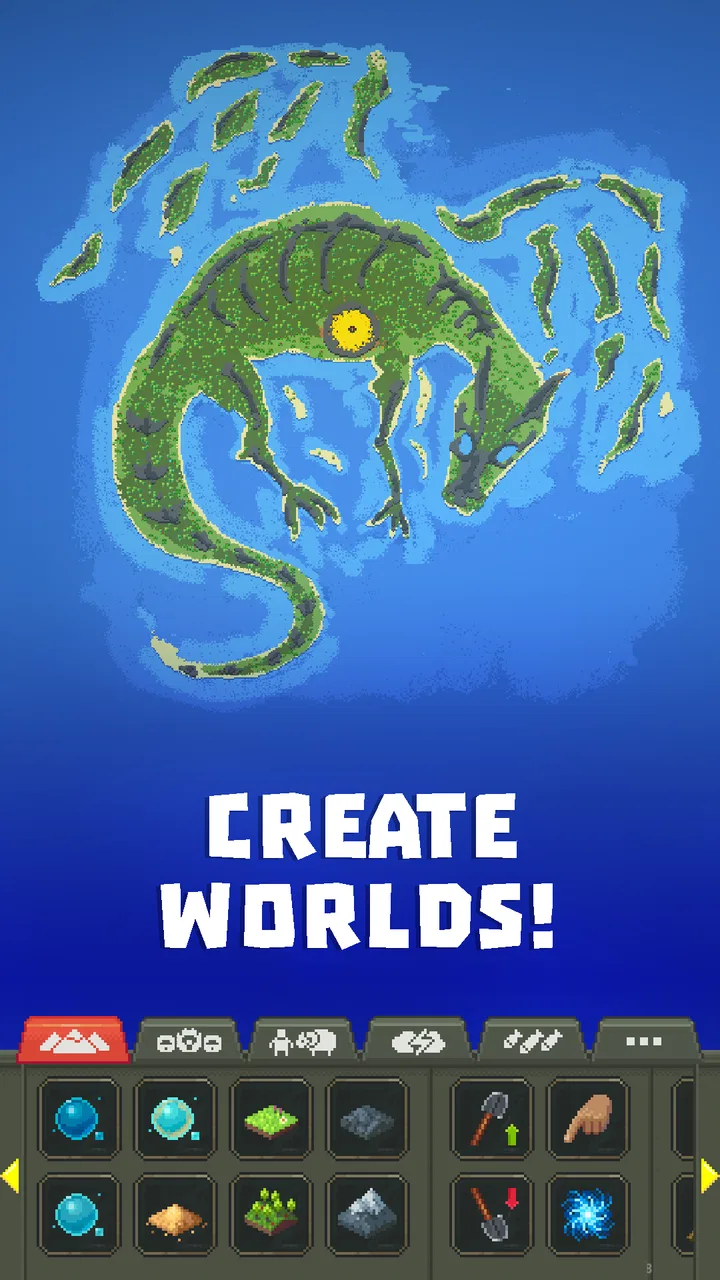
The first thing I noticed is that WorldBox asks me to think like a creator rather than a traditional player. I can shape a setting, populate it, and then observe how its civilizations develop or clash. That makes each session feel less like completing a checklist and more like testing a small social experiment. I might begin with a peaceful arrangement, then alter the balance and see whether the world adapts or collapses.
You May Also Like

 Blood Strike: 2.5 Anniversary
Blood Strike’s Loadouts Turn Every Drop Into a Tactical Gamble
A close look at Blood Strike’s custom loadouts: how fast access to signature weapons reshapes its battle royale rhythm, rewards preparation, and narrows the gap between fights.

 Pandora - Music & Podcasts
Pandora’s Music Is Easy to Start, but Harder to Recover
Pandora’s strength is its low-effort path from a seed to a station. Its weak spot is how much confidence it asks you to place in connection, setup, and quiet recovery.

 8 Ball Pool
 Is Built on Rivalries, Rematches, and Routine
A close look at the rivalries, rematches, shared routines, and unanswered safety questions that turn a quick pool match into a persistent mobile community.

 Samsung Music
’s Quiet Strength Is Playing What You Already Own
Its reach comes less from spectacle than from dependable access to a personal library. That simplicity is both the app’s strongest retention engine and its ceiling.

 AccuWeather: Weather Radar
AccuWeather Review: A Quick, Clear Forecast for Everyday Decisions
For everyday plans, the best forecast is the one you can understand quickly. AccuWeather makes rain timing, radar, and local conditions easy to act on, with a few trade-offs.

 Hill Climb Racing
Why Hill Climb Racing Still Turns Crashes Into One More Run
A tiny car, a bumpy hill and one more upgrade: Hill Climb Racing keeps resurfacing because its simple chaos makes every near-miss feel personal.
More From Our News Desk
View All News


That freedom is also the game’s main challenge. There is no single campaign route pushing me from one task to the next. If you need constant objectives, character progression, or a clear victory screen, the experience may feel directionless. I had to decide what I wanted to investigate before the sandbox became interesting. Once I did, even a short session could produce a surprising chain of events.
In practical terms, it works well as a game to open when I have a few spare minutes. I can create a situation, watch it develop, and leave when the experiment has reached a natural turning point. It also works for longer sessions when I want to compare different setups. The important distinction is that the entertainment comes from observing consequences, not from collecting rewards at a predictable pace.
A realistic use case is a quiet evening when I do not want the pressure of a competitive match. I can build a small world, let its communities grow, and intervene only when I feel the story needs a push. Another day, I might use the same idea as a creative exercise: start with a balanced environment, make one major change, and watch how much of the world’s future is affected by it. That kind of play is more thoughtful than it first appears.
What makes the simulation interesting
The strongest part of the design is the distance between action and result. When I change the world, I am not always rewarded immediately. The more satisfying moments happen when a small decision creates a larger consequence later. That delay encourages me to observe carefully instead of constantly tapping for instant feedback.
I also found that restraint matters. It is tempting to interfere whenever something unexpected happens, but leaving the world alone can be more revealing. A useful approach is to establish a simple starting condition, wait long enough to see a pattern, and only then make one change. If I alter several things at once, it becomes difficult to understand what caused the next development.
That leads to one of my most useful tips: treat each session as a controlled experiment. Keep the initial setup modest, remember what you changed, and compare the result with a later attempt. This makes the sandbox feel deeper without requiring complicated rules or a formal challenge mode. It also prevents the common mistake of filling the world with activity before there is any meaningful contrast to observe.
Another practical habit is to give a new world a clear theme. A peaceful test, a survival-focused setup, and a deliberately unstable world create very different moods. Without a theme, I sometimes found myself making random changes simply because the tools were available. With one, even small decisions felt connected to a larger story.
The game’s simulation category is important here. It is not trying to replace a conventional strategy game with detailed turn planning, nor is it a character-driven adventure. I am closer to a director or caretaker than a commander. That distinction helps set expectations: the best moments are emergent and observational, while the weaker moments arrive when I want the game to tell me exactly what to do next.
Free access and the question of value
WorldBox is free to download and play, which makes it easy to test without committing money first. That matters for this particular genre because the attraction is personal. Some players will immediately enjoy creating situations and watching them unfold; others will discover that an open sandbox feels too passive. Free access lets me make that judgment through play rather than relying on screenshots or a short description.
There are in-app purchases priced from $1.99 to $7.99 per item. I see that as a reason to spend time with the free experience before buying anything. The sensible question is not whether the game can be started at no cost, but whether the extra value matches how often I return to the sandbox. If I only open it occasionally for quick experiments, free access may be enough. If it becomes a regular creative hobby, a purchase can be considered on the basis of personal use rather than impulse.
I would not describe the paid option as automatically necessary for every player. The verified price range tells me the purchases are optional transactions within a free game, but it does not turn the game into a guaranteed bargain for everyone. My advice is to first find out whether you enjoy the central loop of creating, waiting, and observing. Paying will make more sense only after that loop has already earned a place in your routine.
This is also where WorldBox differs from many conventional simulation alternatives. A management game usually gives me explicit targets, resource decisions, and a stronger sense of optimization. A city builder may reward careful planning with visible expansion. A strategy game often measures success through territory or victory conditions. Here, the value is more personal: I decide what counts as an interesting outcome. That flexibility is liberating, but it also means the game cannot manufacture motivation for me.
Compared with a creative building game, WorldBox is less about constructing a perfect visual space and more about setting conditions for life to develop. Compared with an idle game, it offers more room for intervention and interpretation, but less certainty about what I will achieve in a session. Those trade-offs explain why it can feel fascinating to one player and oddly empty to another.
Small decisions that improve the experience
My first concrete recommendation is to avoid starting too large. A compact world makes cause and effect easier to follow. When everything is happening everywhere, important changes can become background noise. A smaller setup gives me time to notice relationships, turning the simulation into something I can actually read rather than merely watch.
Second, I recommend separating creation time from observation time. I get better results when I make the initial changes, stop touching the world for a while, and let events develop. Constant intervention can hide the game’s most interesting quality: the sense that the world is continuing beyond my direct attention. This is especially useful for players who initially think nothing is happening because they are trying to force every moment.
Third, use deliberate resets. If a world becomes too chaotic to understand, starting again is not a failure. I can preserve the lesson from the previous attempt and build a cleaner test. For example, I might repeat a setup with one alteration instead of trying to repair a tangled situation. That approach turns experimentation into a series of comparisons and helps the game stay fresh.
A fourth insight is to play according to mood. When I want calm, I create a setting that I can observe without rushing to interfere. When I want drama, I introduce a stronger contrast and accept that the result may be difficult to control. This sounds obvious, but it prevents disappointment: the sandbox is more enjoyable when I choose the kind of story I want to watch before I begin.
There is also a useful social angle, even when playing alone. I can describe a world’s starting conditions to a friend and compare the results of our separate experiments. The point is not to prove who played correctly, because there is no universal correct outcome. The value comes from discussing why two similar setups became interesting in different ways. That gives the open format a little of the structure that a traditional multiplayer challenge might provide.
Where the trade-offs become noticeable
The lack of a fixed objective is both the game’s identity and its biggest limitation. I cannot recommend it without qualification to someone who wants a clear progression path. If your ideal mobile game gives you missions, unlocks, and a strong reason to return each day, this sandbox may require too much self-direction. Another simulation or strategy title would probably serve you better.
It can also be less satisfying when I want immediate control over every outcome. World-building simulations often create results that are difficult to predict, and that uncertainty is part of the point. Still, there are moments when I wanted a specific story and received something else. The game rewards curiosity more reliably than it rewards precision.
The observational format may not suit players who dislike waiting for consequences. Some of the pleasure depends on giving a situation time to develop, so rapid tapping does not necessarily improve the experience. I had to accept that a quiet period can be meaningful even when the screen is not displaying a dramatic event. Players who prefer constant action should approach cautiously.
There is a learning curve, although not the same kind found in a complex strategy game. The challenge is learning how to create interesting conditions rather than memorizing a long list of commands. New players may initially experiment without a plan, see a messy result, and assume the game lacks depth. In my experience, the better response is to simplify the next attempt and focus on one question.
The free-to-play structure deserves attention as well. Because purchases range from $1.99 to $7.99 per item, I would keep spending controlled and decide in advance what the game is worth to me. The free entry point is a genuine advantage, but optional purchases can still change how a player evaluates the experience. I prefer treating them as a later decision, not part of the installation decision.
Device compatibility is comparatively broad: the game requires Android 6.0 or later. That makes it accessible to many Android users, though actual comfort will still depend on the phone or tablet and on how much is happening in the world. I would begin with a modest setup on an older device and increase complexity gradually, rather than assuming every situation will feel equally smooth.
Who will get the most from it
I think WorldBox is a strong match for players who enjoy emergent stories, creative experiments, and games that leave room for personal rules. It is especially appealing if you like asking “what happens if I change this?” and then waiting for the answer. The game also suits people who want a low-pressure alternative to competitive play, provided they are comfortable creating their own goals.
It can be a good choice for short breaks because a world can be prepared quickly and revisited later. It is also suitable for longer sessions when I want to compare different approaches. The flexibility is valuable: I do not need to commit to a campaign, a team, or a fixed schedule. I can play with a clear plan or simply explore.
I would skip it if I mainly want a polished narrative, direct character control, or a reliable series of rewards. I would also look elsewhere if I want a deep economic system with carefully balanced production chains, because WorldBox’s appeal lies in life and civilization unfolding rather than in spreadsheet-style management. A conventional city builder or strategy game is likely better for players who measure enjoyment through efficiency and planned expansion.
Parents may appreciate the Everyone content rating, but the open-ended nature still means the game is best introduced as a creative sandbox rather than a guided educational tool. The rating describes its broad suitability; it does not guarantee that every player will find the lack of structure engaging. I would show a new player how I approach an experiment, then let them decide what kind of world they want to make.
My recommendation after playing
WorldBox succeeds because it turns the player’s imagination into the main source of direction. I enjoyed it most when I stopped looking for a conventional win condition and started treating each world as a small story generator. Its free price makes that discovery easy, while the optional purchases from $1.99 to $7.99 mean I can postpone any spending until I know the sandbox belongs in my regular rotation.
The large audience, including over 50 million installs and around 38 thousand written reviews, suggests that the format has reached far beyond a tiny group of simulation enthusiasts. Still, I would not use those figures as a substitute for knowing your own preferences. The game’s unusual strength is also its clearest warning: it gives me freedom, but it expects me to bring curiosity and patience.
My verdict is to try it if you want a relaxed, imaginative simulation where civilizations can grow, conflict can reshape the setting, and your role is closer to an unseen world-maker than a traditional hero. Start small, change one thing at a time, and resist the urge to control every outcome. If that sounds enjoyable, the free entry point offers real value. If you need missions, tight progression, or constant action, I would skip it and choose a more structured alternative instead.
For me, the best reason to keep WorldBox installed is not the promise of one perfect world, but the possibility that every new experiment will behave differently.
FAQs for WorldBox - Sandbox God Sim
01What is WorldBox - Sandbox God Sim about?
WorldBox - Sandbox God Sim is a unique simulation game where players take on the role of a god with the ability to create and destroy worlds. The game allows you to experiment with various elements, create life, and watch civilizations develop. It’s an open-ended sandbox experience offering endless creative possibilities.
02Is WorldBox available for both Android and iOS devices?
Yes, WorldBox is available for download on both Android and iOS platforms. The game has been optimized for mobile devices, ensuring a smooth gameplay experience on a variety of smartphones and tablets. You can find the download links on the Google Play Store and Apple App Store.
03What are the main features of WorldBox?
WorldBox offers a range of features including the ability to create and modify terrain, introduce weather patterns, and customize various life forms. Players can experiment with natural disasters and observe how different civilizations react and evolve. The game also includes a variety of tools that allow for detailed world-building and creative freedom.
04Are there any in-app purchases or ads in WorldBox?
WorldBox is free to download, but it does offer in-app purchases that allow players to unlock additional features and tools. These purchases are optional, and the core gameplay experience can be enjoyed without them. The game may also include ads, but these are generally unobtrusive and do not interfere with gameplay.
05Can I share my creations in WorldBox with others?
Yes, WorldBox allows players to save their worlds and share them with friends. You can export your creations and import worlds made by other players. This feature enhances the community aspect of the game, allowing players to showcase their creativity and discover new ideas from others.
Pros
- Creative freedom with limitless possibilities.
- Simple
- intuitive controls for easy gameplay.
- Regular updates with new features and elements.
- Vibrant
- engaging pixel art style.
- No internet required for solo play.
Cons
- Limited tutorial for beginners.
- Can become repetitive over time.
- Some features locked behind a paywall.
- Occasional performance issues on older devices.
- Lacks multiplayer mode for collaborative play.

WorldBox - Sandbox God Sim
Gallery